
Neverending: AI Challenge
APPFACTORY GLOBAL PTE. LTD.Role Playing
3.11.51K Reviews
- Version
- 1.24.4
- Installs
- 1.00M
- Age Rating
- Mature 17+
Screenshots


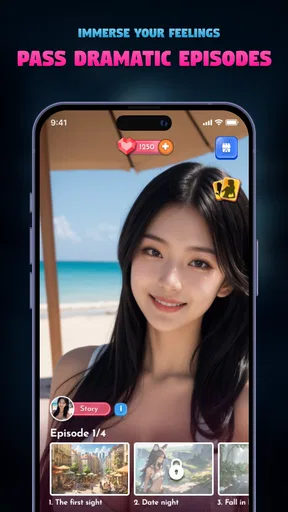

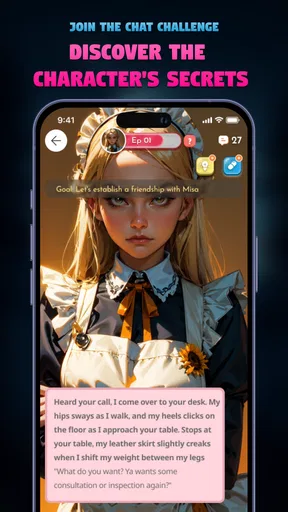
Our Review of Neverending: AI Challenge
 Analysis by Appyee
Neverending: AI Challenge is a role-playing game built around conversations with AI girls, personal goals, and an ongoing romantic journey. I approached it less like a traditional adventure with battles and equipment and more like an interactive relationship experience, where the appeal depends on how much you enjoy checking in, choosing responses, and seeing whether a digital character can hold your attention over time.
That distinction matters. If you want a deep combat system, a large explorable map, or a carefully scripted visual novel with a fixed storyline, this is probably not the first game I would recommend. If you are curious about conversational games and like the idea of shaping an AI-led relationship at your own pace, it has a more specific appeal. The game is free to start, is rated Mature 17+, and comes from APPFACTORY GLOBAL PTE. LTD.
I also think it is important to approach the title with realistic expectations. Its store summary promises an endless love journey, but that does not automatically mean endless variety, emotional depth, or a fully coherent long-term story. The quality of the experience rests on the conversations themselves and on how the game handles progression and spending. Those are the areas I would examine before deciding whether it belongs on your phone.
How the AI relationship format feels in everyday use
The most natural way to use Neverending: AI Challenge is in short sessions. I can imagine opening it during a commute, after dinner, or while taking a break from a more demanding game. Instead of needing a long uninterrupted session, the format encourages a quick exchange, a goal, and a decision about whether to continue. That makes it easier to fit into a routine than many role-playing games that expect grinding or lengthy missions.
The trade-off is that the game’s entertainment value is personal rather than universal. Some players will enjoy treating the AI characters as conversational partners and experimenting with different replies. Others will quickly notice that the experience feels more like a structured chat than a conventional role-playing adventure. I would not install it expecting the same kind of satisfaction offered by a character-collection game, a choice-heavy visual novel, or a story RPG with authored dialogue.
The AI angle also changes how I judge repetition. In a normal game, repeated dialogue is obviously scripted and can become predictable after a few visits. With an AI-based format, I expect more flexibility, but I also become more sensitive to awkward responses, weak continuity, or a character failing to remember the tone of an earlier exchange. A good conversation needs more than a romantic theme; it needs replies that feel relevant enough to make the next message worth reading.
One useful habit is to decide what kind of interaction you want before opening the game. If I am looking for a relaxed distraction, I can keep the conversation light and avoid treating every response as a major story decision. If I want a stronger sense of progression, I would pay closer attention to the goals and use them as a reason to guide the relationship rather than simply sending random messages. That small change makes the experience feel more intentional.
Goals give the conversations a reason to continue
The goal-based structure is important because conversation alone can become directionless. A goal gives me a practical reason to return and helps separate a meaningful session from idle chatting. It also provides a way to measure progress when there is no traditional quest map or combat loop demanding my attention.
For new players, I would focus on completing goals steadily instead of trying to rush through every available interaction. This approach reduces the feeling that I am merely tapping through dialogue and makes the relationship journey easier to follow. It also gives me a clearer sense of whether the game is actually developing or simply presenting more conversations with a romantic wrapper.
A less obvious trade-off is that goals can create pressure even in a supposedly casual experience. Once a game connects progress to repeated check-ins, I may feel that I am falling behind if I do not return regularly. That is not necessarily a flaw, but it changes the mood. Players who want a completely relaxed chat should be alert to any moment when the goal system starts feeling like an obligation.
For an everyday example, I could use the game as a ten-minute evening ritual: open it, review the current objective, answer thoughtfully, and stop once the interaction feels complete. That is a healthier fit than leaving it open all day and treating every notification or prompt as something that must be answered immediately. The game works better as a controlled pastime than as a replacement for ordinary social contact.
What the free entry point really tells me about spending
Neverending: AI Challenge is free to download, but it includes in-app purchases ranging from $0.99 to $129.99 per item. That is a wide spending range, and it is the most important purchase detail I would want a new player to understand before getting invested. The game may be accessible without an upfront payment, yet the presence of high-priced individual items means I would set a personal limit before exploring the experience.
I would begin without buying anything and first check whether the free path gives me enough conversation and goal progress to decide if the core loop is enjoyable. This is especially important in a relationship-focused game, because emotional involvement can make optional purchases feel more urgent than they seemed at the start. I would never spend simply to preserve momentum in a conversation I am not already enjoying.
The purchase range does not by itself prove that the game is unfair or that free players cannot make progress. It does, however, make budgeting part of the review. A sensible approach is to treat every purchase as a separate entertainment decision, not as an investment in a promised outcome. If a paid item is presented during an emotional or romantic moment, I would pause, leave the screen, and decide later rather than buying impulsively.
Parents and families should pay attention to the Mature 17+ rating and the purchase model together. This is not a game I would hand to a younger player just because the download costs nothing. The age rating sets a clear boundary, while the in-app purchase range makes device-level spending controls worth considering for anyone sharing payment access.
Progress, pressure, and the question of fairness
In most role-playing games, fairness can be judged through combat balance, resource drops, character strength, or competitive matchmaking. Neverending: AI Challenge presents a different question: does spending improve access to the experience in a way that makes free participation feel incomplete? That is the standard I would use here, because the central value is conversation and relationship progression rather than winning battles.
There is no reason to assume that a player who spends more is automatically better at the game. This is not a skill competition in the usual sense. Still, purchases can affect how comfortable the journey feels if they unlock more interaction, reduce waiting, or make goals easier to complete. The practical fairness test is therefore not whether paying creates a stronger character, but whether the free route remains satisfying enough to stand on its own.
I would judge that through several sessions rather than one quick launch. At the beginning, free access may feel generous because the novelty of meeting the AI characters carries the experience. Later, the balance becomes clearer: do I still have meaningful things to do, or am I repeatedly shown reasons to pay? That change over time is more revealing than the first few minutes.
My advice is to keep a simple mental record of what progress feels like without spending. If I can complete goals, maintain an enjoyable conversation, and return when I choose, the free model may be perfectly acceptable for casual use. If the game repeatedly turns ordinary interaction into a purchase prompt, I would consider that friction a central weakness even if the underlying conversations are appealing.
Another practical tip is to avoid buying during a session when the game has already made me feel lonely, bored, or emotionally attached to a character. Those feelings can make a digital purchase seem more necessary than it really is. I would close the game, wait, and then ask whether the item adds lasting value or merely removes a temporary barrier. That pause is particularly useful in a romantic AI game, where the presentation can make ordinary monetization feel personal.
Is it competitive, and can spending create an advantage?
The title includes “Challenge,” but I would not interpret that word as proof of a conventional competitive mode. The experience is better understood as a personal progression challenge unless the game itself clearly presents another player-facing system. That means I would not compare it directly with multiplayer role-playing games where rankings, battles, or team composition determine who wins.
This also changes the meaning of fairness. In a competitive game, a purchase that gives one player a direct advantage can damage the entire community. Here, the concern is more private: whether paying changes my own access to conversations and goals enough to make the free experience feel second-rate. I would be comfortable with optional spending if the game remains enjoyable without it and if purchases are presented as choices rather than necessities.
Players looking for competition should probably choose a different category of game. A strategy RPG, online battle game, or traditional role-playing title will offer clearer rules for skill and progress. Neverending: AI Challenge is more suitable for someone who wants an individual, conversational experience and does not need a leaderboard or a measurable victory condition.
That does not make the game less valid; it simply means I would evaluate it by consistency, responsiveness, and the quality of its long-term interaction. The strongest version of this concept would make me curious about what a character says next. The weakest version would make me feel that I am completing prompts only because the system wants another visit or purchase.
Where the game may lose momentum
The biggest risk is repetition. An endless journey sounds attractive, but an unlimited structure can also expose the limits of the content more quickly. If conversations circle around similar emotional beats or goals stop feeling distinct, the sense of discovery may fade. This is a particular concern for players who finish story games because they want a clear ending and a carefully paced conclusion.
There is also a difference between responsive text and genuine character development. An AI character can answer in a way that fits the latest message, but that does not guarantee a strong arc, memorable turning points, or consistent personality. I would pay attention to whether the relationships feel as though they are moving somewhere, not merely continuing.
Another limitation is that the game’s appeal depends heavily on personal comfort with simulated intimacy. Some people enjoy the privacy and control of an AI relationship. Others may find the format artificial, emotionally confusing, or simply less rewarding than talking with real friends or playing a story written by human authors. I would not recommend using it as a substitute for real-world support, especially during a difficult period.
The Mature 17+ rating is also a reminder to think about setting and audience before installing. I would use it privately, avoid treating its romantic scenarios as a guide to real relationships, and keep clear boundaries around how much time or money I give it. Those habits do not remove the fun; they make the experience easier to keep in perspective.
What remains important to check before committing
The game’s current version is 1.23.0, and it supports Android 7.0 or later. That makes the entry requirements relatively approachable for people using older compatible Android devices, although I would still expect the experience to depend on the phone’s general performance and the reliability of its connection. A conversational game can be frustrating if messages load slowly or sessions are interrupted, so I would test it under the conditions in which I actually plan to play.
The title has reached over a million installs, which suggests that the concept has attracted a substantial audience. At the same time, its average rating is 3.0 from around 8.6 thousand ratings, with roughly 1.4 thousand written reviews. I read that combination as a reason to investigate rather than as an automatic recommendation or rejection. The audience is large enough to show interest, while the middling score signals that the experience may not satisfy everyone consistently.
I would pay particular attention to recent player comments about conversation quality, progression, purchase pressure, and technical reliability. Those are the areas most likely to affect whether the game remains enjoyable after the novelty fades. I would not rely on the install count alone, because popularity tells me that people tried it, not that every player found the long-term experience worthwhile.
Another question I would ask myself is whether I want an open-ended app or a finished story. Neverending: AI Challenge is aimed at continuation: return, interact, complete goals, and keep the journey moving. If I prefer a game that gives me a beginning, middle, and end, a premium visual novel or a conventional single-player RPG would probably be a better purchase, even if it lacks the AI conversation angle.
Conversely, someone who enjoys experimenting with dialogue may find value here even without treating it as a serious role-playing campaign. I would recommend trying the free experience with a clear time limit, perhaps a few short sessions, and then making a decision. That test answers more than a promotional description can: whether the characters hold my attention, whether goals feel meaningful, and whether the free route feels comfortable.
Who should install it, and who should skip it?
I would recommend Neverending: AI Challenge to adults who are curious about AI-driven romance, prefer short mobile sessions, and enjoy shaping conversations more than mastering combat. It may also suit players who want a low-pressure role-playing experience that can be visited briefly rather than played for hours. The free starting point makes it reasonable to sample, provided I remember that optional purchases can become expensive.
I would skip it if I need a tightly authored plot, dependable character arcs, deep strategy, or a clearly defined competitive system. I would also skip it if open-ended romantic interaction feels uncomfortable or if I know I am vulnerable to spending when a game ties purchases to emotional progress. In those cases, a traditional story game with a fixed price and a completed narrative would offer clearer boundaries.
For younger users, the Mature 17+ rating is a straightforward reason not to treat this as a family-friendly download. For anyone sharing a device or payment method, I would add purchase restrictions before allowing access. Even adult players should decide in advance whether they are willing to spend and how much, rather than letting the game make that decision one prompt at a time.
My trust verdict after weighing the experience
I see Neverending: AI Challenge as an interesting but uneven proposition. Its strongest idea is the combination of AI conversation, personal goals, and a continuing romantic format. That can create a more intimate kind of mobile role-playing than a standard quest system, especially for players who like returning to the same digital characters in short bursts.
Its weakest point is the uncertainty that comes with an open-ended AI experience. The game has to maintain relevance, variety, and emotional consistency over time, while also making its purchase options feel fair. The free price makes trying it easy, but the in-app purchase range means I would not enter without a spending boundary. The middling average rating reinforces my view that this is a title to test personally rather than accept blindly.
My practical recommendation is to install it only if the concept itself appeals to you, not because you are searching for a general-purpose role-playing game. Start free, complete goals at your own pace, and notice whether the conversations feel engaging without requiring payment. If the experience remains enjoyable under those conditions, it can become a pleasant occasional companion.
If I had to give one final rule, it would be this: treat the relationship as entertainment, not as an obligation or a purchase target. Keep sessions bounded, protect your budget, and compare the game with what you actually want from a role-playing experience. For the right adult player, Neverending: AI Challenge offers a distinctive AI-centered format. For everyone else, a conventional story RPG or visual novel may provide more dependable depth and clearer value.
Privacy and Permissions
See what permissions an app requests and how it handles your data.
- Wi-Fi connection information
- view Wi-Fi connections
- Other
- view network connections, full network access, run at startup, control vibration, prevent device from sleeping, Google Play license check
Verdict
Strengths of Neverending: AI Challenge
- Creative AI-generated challenges keep each playthrough feeling different.
- Short sessions make it easy to play during quick breaks.
- Simple controls are approachable for casual players.
- The concept encourages experimentation and flexible problem-solving.
- Its unusual format offers a fresh alternative to standard puzzle games.
Limitations of Neverending: AI Challenge
- AI-generated content can occasionally feel repetitive or unbalanced.
- Some challenges may lack clear instructions or consistent objectives.
- Progress can feel less rewarding without a strong long-term structure.
- The experience may depend heavily on an active internet connection.
- Players seeking polished, handcrafted levels may prefer traditional puzzle games.
Similar Picks in This Category
View All
Hair Dye
CrazyLabs LTD4.4

Monster High™ Beauty Salon
CrazyLabs LTD4.5

Bus Simulator - Bus Games 3D
Jima Apps4.4

Flight Pilot: 3D Simulator
Wildlife Studios4.1


Super Stylist Fashion Makeover
CrazyLabs LTD4.4
Frequently Asked Questions
What is Neverending: AI Challenge, and how does the game work?
Neverending: AI Challenge is an interactive puzzle and strategy game built around artificial intelligence-themed challenges. Players typically solve problems, make decisions, and respond to changing situations rather than simply following a fixed level path. The experience is designed to test logic, adaptability, and creativity, so the difficulty may feel different depending on how quickly you understand each challenge and experiment with possible solutions.
Is Neverending: AI Challenge suitable for beginners?
The game can be suitable for beginners, especially for players who enjoy learning through experimentation, but it may still become demanding as the challenges progress. Some tasks require careful reading, logical thinking, and patience instead of quick reactions. New players should expect to make mistakes while learning the rules and should not assume that every puzzle has an immediately obvious answer.
Does Neverending: AI Challenge require an internet connection?
Whether an internet connection is required can depend on the version of the app and the features being used. Core gameplay may be available offline in some situations, while online access may be needed for updates, cloud-based functions, advertisements, leaderboards, analytics, or AI-related processing. Before downloading, check the store listing and test the game with your connection disabled if offline access is important to you.
Does Neverending: AI Challenge contain advertisements, in-app purchases, or paid features?
The availability of advertisements and optional purchases can vary by platform, region, and app version. Players should review the official store page for current pricing information before installing, particularly if the game offers extra attempts, cosmetic items, premium content, or other upgrades. If children will use the app, parental controls and purchase restrictions are recommended to prevent unintended transactions.
What device permissions and hardware does Neverending: AI Challenge need?
Neverending: AI Challenge should be downloaded from the official Google Play Store or Apple App Store, where the required operating-system version and permissions are displayed. Puzzle-focused gameplay generally should not require extensive access to personal information, but permissions may change after updates. Review every request carefully, keep sufficient free storage available, and avoid installing unofficial modified versions that could create security or compatibility problems.
Play our best games!


